


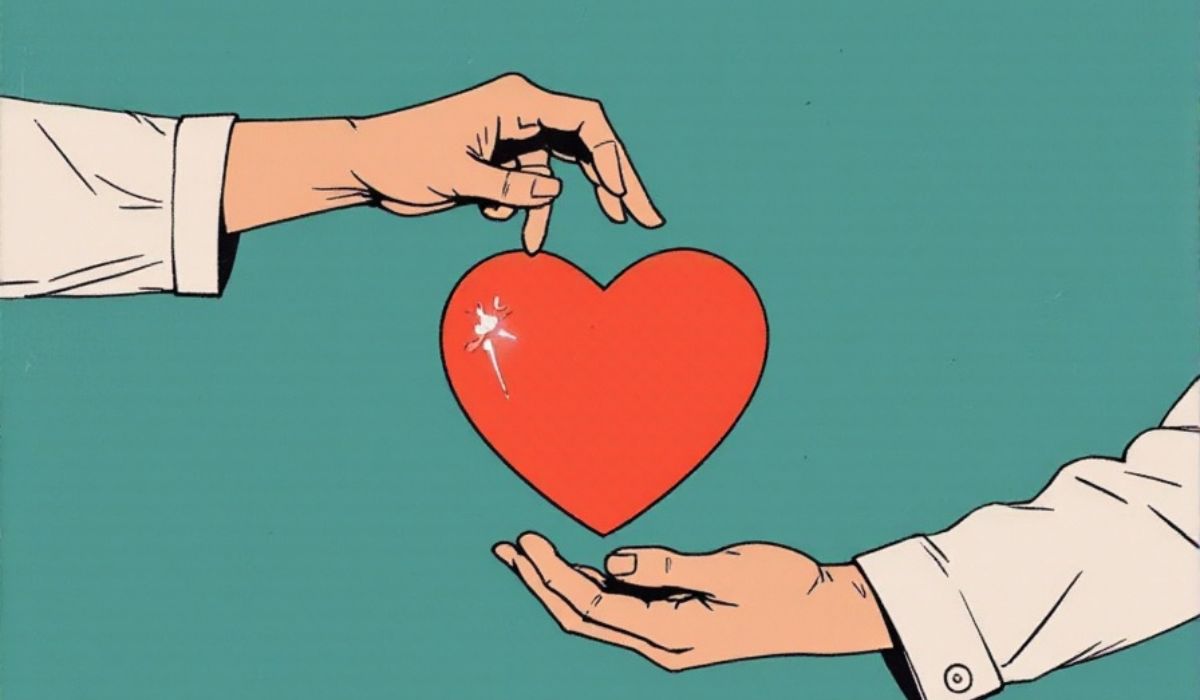
You end one relationship and swear things will be different. The next person seems completely unlike your ex — different background, different personality, different everything.
And then, a few months in, something familiar starts happening. The same dynamic. The same arguments. The same way of feeling unseen, or smothered, or not quite good enough. Different person, same experience. And you start wondering whether the problem isn’t them at all.
This pattern has a name in psychology: repetition compulsion. It’s the unconscious tendency to re-create familiar relationship dynamics — even painful ones — because familiar feels safe, even when safe isn’t the same as good.
The numbers you were born with are arguing with each other.
Discover which one is winning — and what your seven core numbers reveal about who you really are beneath everything else.
Get Your Free ReadingThe relationships that pull you are not random. They’re the ones that feel like home, even if home was never particularly comfortable.
Why Familiar Feels Like a Signal
The nervous system doesn’t distinguish between healthy familiarity and unhealthy familiarity. It distinguishes between what it knows and what it doesn’t. When you meet someone whose emotional patterns match what you learned in early relationships —
parents, caregivers, significant early attachments — the feeling of recognition registers in the body as rightness, as fit, as chemistry.
This is why the people who are immediately, intensely magnetic to you often turn out to be the ones who reactivate your deepest wounds.
Attachment researchers call this the internal working model: the blueprint for relationships that each person develops in childhood based on how their needs were (or weren’t) met. That model operates largely below conscious awareness.
It shapes what you notice, what you’re drawn to, what makes someone feel exciting or safe or interesting. And it tends to pull you toward what it already knows, because what it already knows is what the nervous system has learned to manage — even when managing it is painful.
This is not a character flaw. It’s not weakness. It’s the way human attachment wiring works. The same system that helped you survive your earliest relationships is now running your adult ones — and it hasn’t updated its programming based on what you actually want now, versus what you needed to manage then.
The Specific Patterns Worth Recognizing
You’ll know you’re in the repetition compulsion if you find yourself consistently attracted to people who are emotionally unavailable in similar ways —
who run hot and cold, who need a certain kind of emotional management from you, who create a dynamic where you’re always working to prove your worth or earn their full presence.
The specific characteristics of the person may vary. The dynamic remains remarkably consistent.
Pay attention to how you feel in the first weeks of a new relationship. The pull that feels like intensity, chemistry, or depth is worth examining.
Ask whether what you’re feeling is genuinely connection — or the particular electricity that comes from familiar wounding being activated. Both feel real. They have different sources. And they lead to very different places over the long term.
Also notice what role you play in these relationships consistently. Are you the fixer, the caretaker, the one who holds everything together? Are you the one who needs more than the other person can give, and tries to shrink your needs to make the relationship work?
Are you the one who disappears before things get too close? The role you play is as revealing as the person you choose. It’s part of the same pattern.
What Changes the Pattern
The pattern changes when you stop trying to change the outcome and start examining the source. That means getting genuinely honest about what feels familiar in the relationships that pull you most strongly — and tracing that familiarity back to where it comes from.
Not to assign blame, and not to stay in the past, but to update the internal working model with new information. The nervous system can’t be argued out of its patterns. It has to be given new experiences — over time, with enough repetition — to recognize that something different is also safe.
This is where therapy becomes genuinely useful, particularly attachment-focused or relational therapy. Not because something is wrong with you —
nothing is wrong with you — but because shifting unconscious relational patterns is difficult to do without the experience of a different kind of relational dynamic, which is precisely what a good therapeutic relationship provides.
You learn, experientially, that it’s possible to be fully seen without it costing you something.
What also helps: slowing down. The people who pull you most intensely in the early stages of a relationship are often the ones most worth approaching carefully.
Not because the intensity is always a warning sign — but because it’s worth asking what’s creating it. Slow enough to notice whether what you’re feeling is genuine mutual recognition or a very sophisticated familiar wound wearing a new face.
The Version of Love You Deserve
The people you’ve loved weren’t wrong choices made out of stupidity. They were intelligent responses to wiring that was set long before you had a say in it. Recognizing the pattern is not the same as accepting that it’s permanent.
People change their relational patterns all the time — not through willpower or good intentions, but through genuine self-knowledge and the willingness to stay in contact with what’s happening in their bodies, in the early stages of connection, before the familiar groove pulls them all the way in.
You are not cursed. You are not broken. You are someone whose nervous system learned to recognize a particular kind of relationship as home. And home can be rebuilt — in a different location, with different materials, with a completely different floor plan.
The question is: are you willing to sit with the unfamiliarity long enough for it to stop feeling unsafe?


